Exploratory Data Analysis on Hotel Booking Demand 🏨
Project Summary:
1) Data Preparation
2) Data Cleaning
3) Data Visualization
4) Exploratory Data Analysis
This project aims to explore the following questions:
✈️ 1) Where do the guests come from?
💰 2) How much do guests pay for a room per night?
📈 3) How does the price per night vary over the year?
😮💨 4) Which are the busiest month?
📊 5) Bookings by market segment.
❌ 6) How many bookings were canceled?
💸 7) Which month has the highest number of cancelations?
🔁 8) Repeated guest effect on cancellations.
🌃 9) The number of nights spent at hotels.
🏝 10) Hotel type with more time spent.
💵 11) Effects of deposit on cancellations by segments.
⏳ 12) Relationship of lead time with cancellation.
🗂 13) Monthly customers and cancellations.
Inferences and Conclusion:
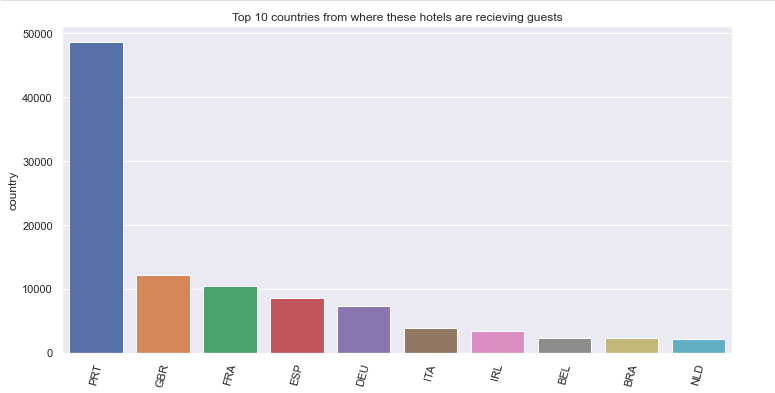 A disproportionately high number of bookings are from Portugal, probably because the hotel is located in Portugal itself. The second country is the United Kingdom which is approx. 75% behind.
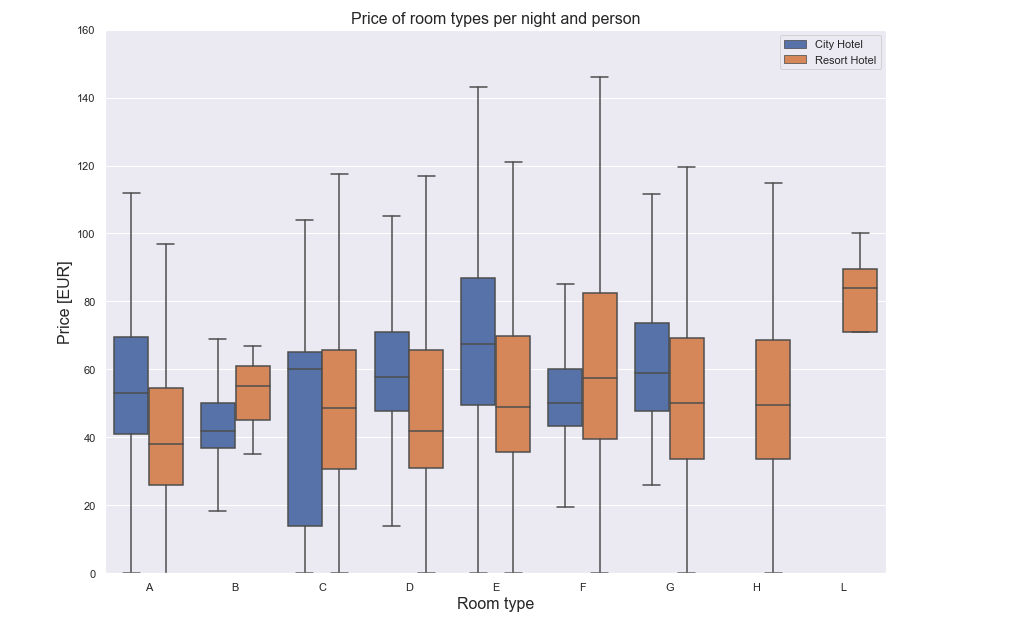 From all bookings which were not cancelled, across all room types and meals, the average prices per night and person are: Resort hotel: 47.56 € / City hotel: 59.29 €.
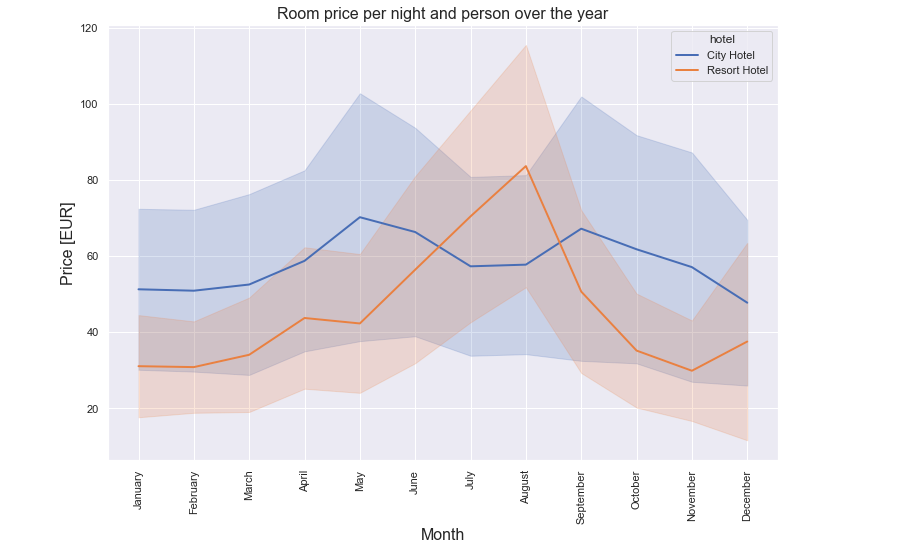 Resort hotel prices are much higher during August when it is summer season in Portugal. City hotel prices varies less and is higher during May and September.
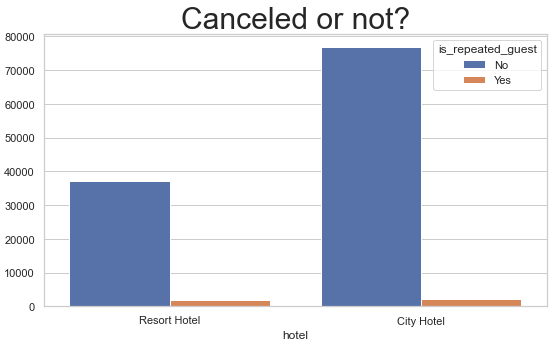 Repeated guests generally do not cancel their reservations but there are some exceptions. Also most of the customers are not repeated guests.
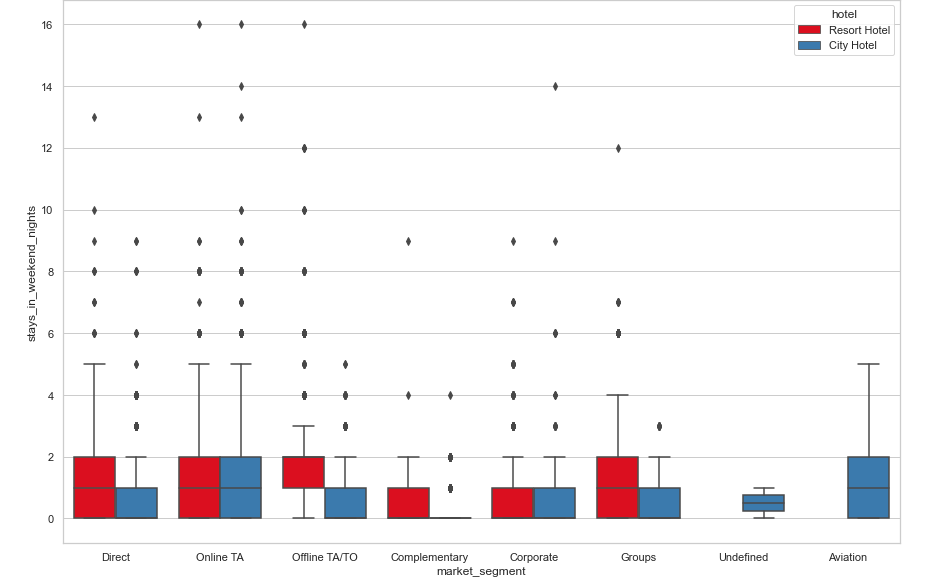 Most people do not seem to prefer to stay at the hotel for more than 1 week. But it seems normal to stay in resort hotels for up to 2 weeks.
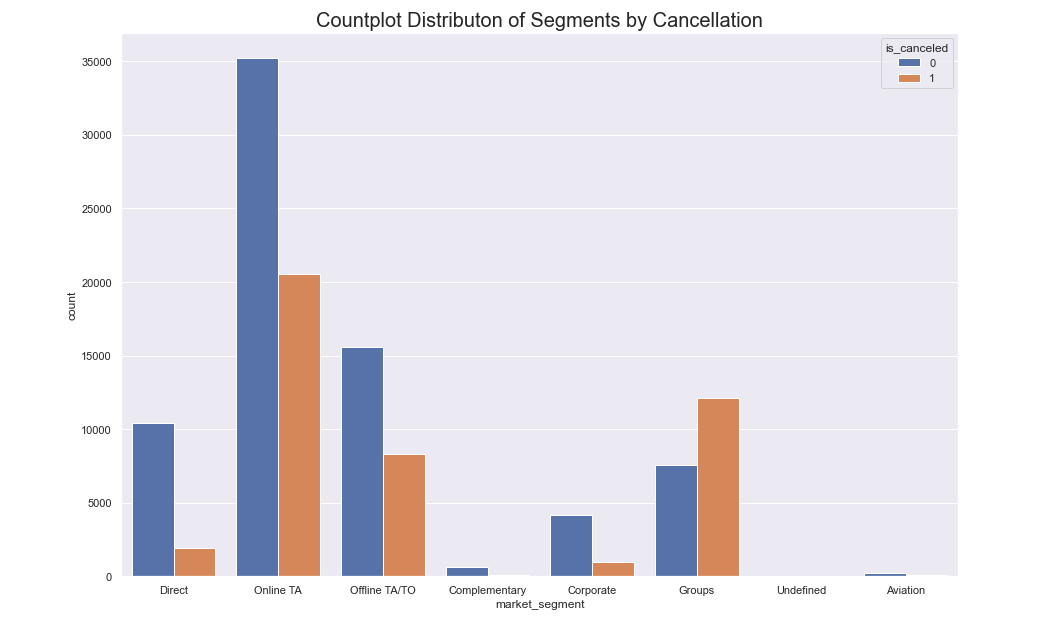 Cancellation rate for groups is greater than 50%. For offline TA/TOs (Travel Agents/Tour Operators) and online TAs, cancellation rates are both greater than 33%. Direct segment have a lower rate of cancellation.
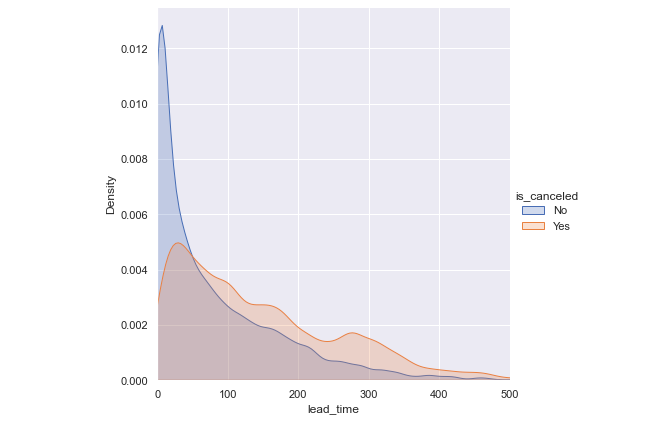 When lead time exceeds about 60, guests frequently cancel their bookings (cancellation rate is higher after this point).
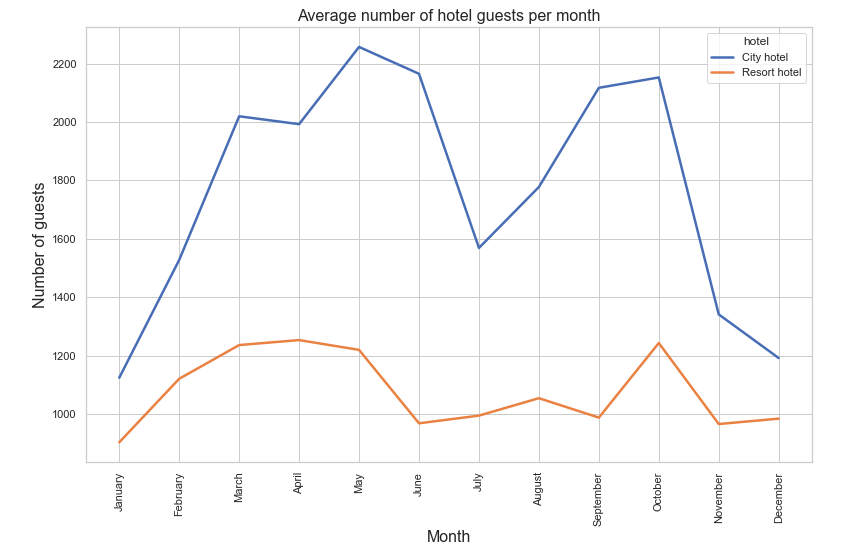 City hotels receive more guests throughout the year compared with Resort hotels, having two peaks in spring and fall when rates are the highest. From June through September fewer guests stay at the Resort hotel when costs are at their greatest. Winter season draws the fewest visitors to both hotels.